


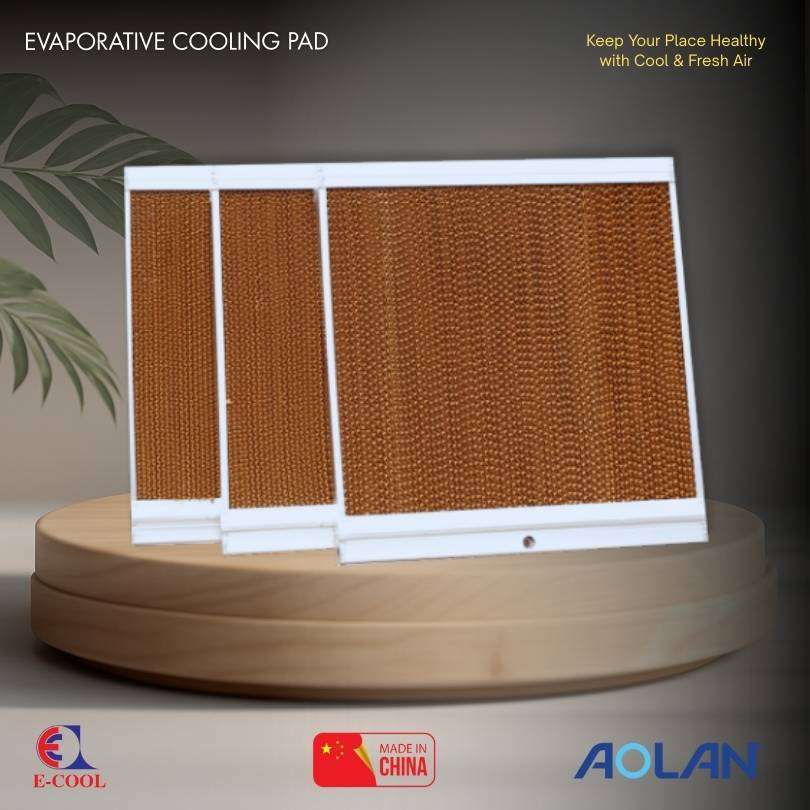
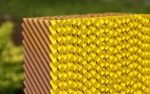
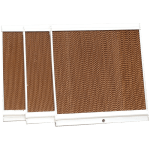
EVAPORATIVE COOLING PAD
Evaporative cooling is a cost-effective solution for reducing high temperatures in textile and garment factories. Using cooling pads and exhaust fans, these systems lower air temperature by 7°C–12°C through water evaporation, improving indoor air quality and worker productivity. The cooling pads are made of high-efficiency cellulose with a cross-fluted design for optimal airflow, low energy use, and long-lasting performance.
Evaporative Cooling
Temperature can easily exceed 40°C in spinning, knitting, dyeing, finishing & garment factory during the summer if they are not equipped with the cooling system. Such high temperature reduces product quality & worker productivity. Evaporative cooling is the most common method for reducing the temperature inside of a factory. Air conditioning systems can be used, but their installation and operation costs are usually prohibited.
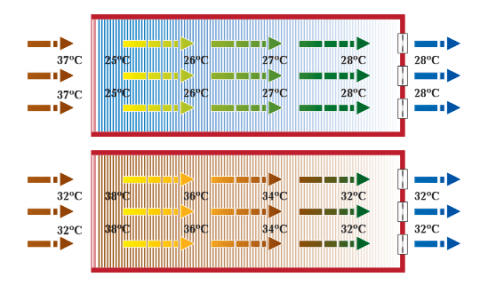
Evaporative cooling is a process that reduces the temperature of 7°C -12°C of air by the evaporation of water into airstreams. As water is evaporated, energy is lost from the air reducing its temperature. Reduced temperature enteres into the room and the room become fresh & cool.

Evaporative Cooling Pad & Exhaust Fan System
A pad-and-fan cooling system typically consists of axial flow ventilation/exhaust fans installed in one wall and correctly sized wetted pads placed along the opposite wall. The fans exhaust air from the building and draw in fresh air through the pads. Exhaust fans should be located on the side of the building that is downwind of the summertime prevailing winds. To function properly, the fans must be able to develop a slight vacuum inside the building. This requires that the remainder of the building be reasonably airtight.
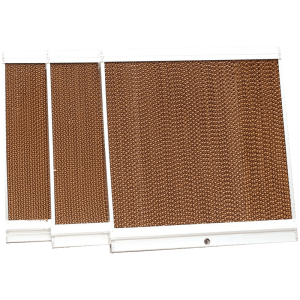
Evaporative Cooling Pad
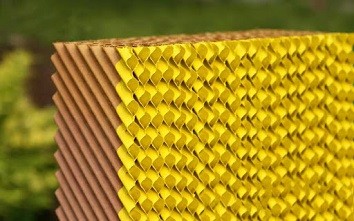
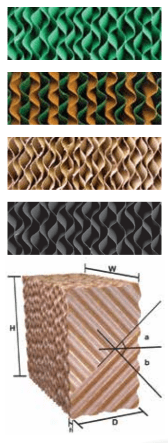
The cooling cells are made from specially formulated cellulose paper impregnated with insoluble anti-rot salts and ensure long service life. It designed with an exclusive cross-fluted configuration, which induced highly turbulent mixing inside the pad between the water and the air, and contributes to the evaporative efficiency. The cross-fluted design makes the pads a strong self-supporting pad with high evaporative efficiency and low-pressure drop (Residence to airflow).
A special water distribution pad spreads water on the surface of the material, ensuring a uniform supply of water to the padded wall to keep the entire air contact surface thoroughly wetted. The wetted surface area of the pad to airflow ratio is large.
These ads are able to cope up with high water flow rates in order for the water to trap dust and other solids. Low resistance to airflow means low power consumption. Water should adhere to the pads and not drop off and be carried into the machine.
| Model | 7090 | 5090 | 7060 |
| H (mm) | 1500, 1800, 2000 | As per requirement | As per requirement |
| W (mm) | 300, 600, 900 | As per requirement | As per requirement |
| D (MM) | 100, 150, 200, 300 | 50 – 150 | 100, 150, 200 |
| h (mm) | 7 | 5 | 7 |
| a (°) | 45 | 45 | 45/30 |
| b (°) | 45 | 45 | 15/30 |
| H: Screen Height W: Screen Width h: Flute Height D: Screen Depth a: Groove Angle b: Groove Angle |
|||


